Updated May 2026

The research on monolaurin, made clear

The research on monolaurin, made clear — effects on bacteria, herpes virus & cold sores, immune system support and fungi

Interest in monolaurin's health benefits has exploded. We analyze every peer-reviewed monolaurin study so you don't have to. Clear answers backed by real evidence.

Monolaurin's antimicrobial properties have been known for decades. Reported benefits include: immune support, cold sores and herpes outbreaks, antibacterial and antifungal. The underlying research, while still mostly preclinical, is real.

785
Studies analyzed in depth
4,000+
Papers tracked
6
Research areas
Monolaurin research chemical structure diagram — glycerol monolaurate with glycerol bonded to a lauric acid chain OH OH O O Glycerol Lauric acid chain (C12) ester bond C₁₅H₃₀O₄ · MW 274.40 Glycerol Monolaurate (Monolaurin) GML · 1-lauroyl-glycerol · glyceryl laurate View verified structure on PubChem

What the research shows

The shortest path through the evidence: membrane disruption, enveloped viruses, and the biology of breast milk.

🦠

Antibacterial — the deepest evidence base

Monolaurin disrupts bacterial membranes on contact — Staph aureus, E. coli, MRSA, Listeria. This is the most-studied effect, with 443 peer-reviewed papers and strong in vitro results.

See the evidence →

Why did we create this website

Monolaurin has been known for decades as having exceptional antimicrobial properties with strong effects against bacteria, viruses and fungi. Also, it is a key component in human mother's milk means it is extremely safe. The combination of these features begs the question as to why it is not more widely used in products ranging from supplements to skin care. We wanted to start by providing links to known, and vetted, information to the large body of reports that currently exist. The included links do not include studies that have not been as thoroughly screened, but that may be consistent with the peer-reviewed studies. These reports are just a starting point to your research on monolaurin.

Three ways monolaurin interacts with microbes

Based on the current body of research — mostly in vitro and animal studies

01
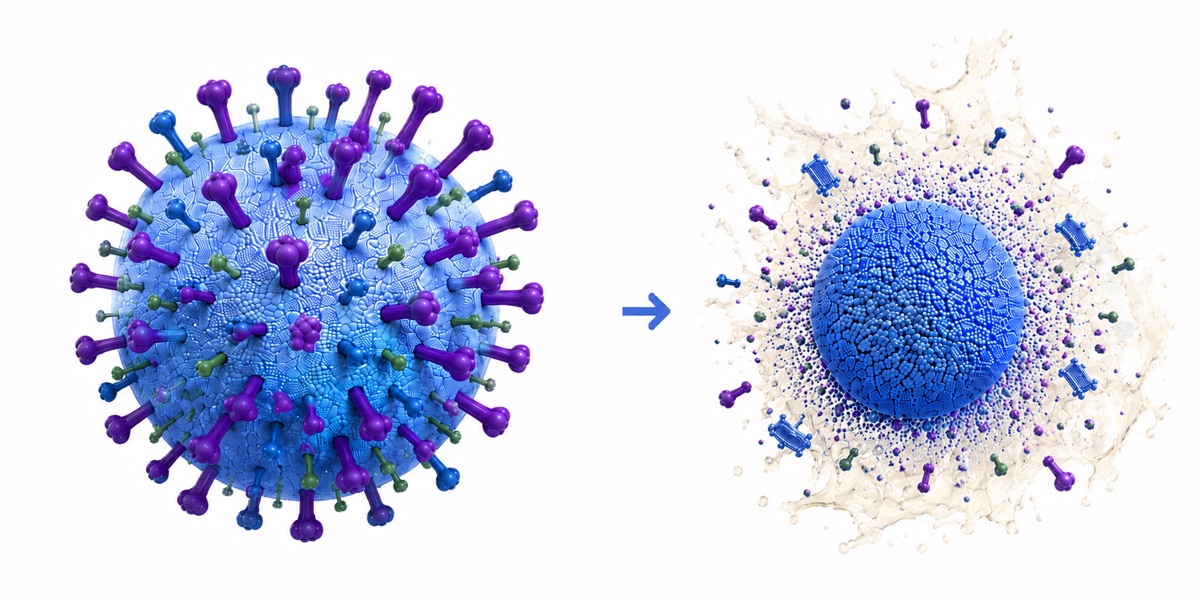
How monolaurin disrupts bacterial and viral membranes — membrane disruption mechanism diagram

Membrane disruption

Monolaurin dissolves the lipid envelope surrounding certain bacteria and viruses, essentially destroying their protective shell.

02
Monolaurin evidence diagram showing bacterial signal blocking and toxin suppression cell blocked

Signal transduction

It interferes with how bacteria communicate and produce toxins, effectively silencing their virulence machinery.

03
Monolaurin immune support research diagram showing T-cell signaling and gut microbiota connections T-cell ↑ active gut flora

Immune modulation

Emerging evidence suggests monolaurin may influence T-cell activity and gut microbiota balance, though human data is limited.

Browse 4103 papers by topic

View full library →
🦠

Antibacterial

443 papers · Staph aureus, E. coli, biofilms, drug-resistant strains, toxin suppression
🛡️

Antiviral

72 papers · SIV/HIV mucosal transmission, swine fever, enveloped viruses, COVID-19 serum levels

Immunomodulation

256 papers · T-cell signaling, gut microbiota, intestinal mucosal inflammation, DSS colitis models
🧬

Biochemistry & Structure

2997 papers · membrane disruption, lipid bilayers, lipid raft signaling, QCM-D mechanism studies
🍽️

Food Science

313 papers · oleogels, nanoemulsion coatings, encapsulation, ruminal fermentation, feed additives
🔒

Safety & Toxicology

22 papers · CIR safety assessments, ruminant tolerability, neuronal toxicity, feed-additive safety